

Underglaze pencils promise fine lines on ceramic surfaces that survive kiln firing. But many artists find the results disappointing. The real question is: why?
Underglaze pencils work well within specific conditions. They excel at fine lines, detail work, and precise marks on bisque ware. Results depend heavily on bisque surface texture, application technique, and firing temperature. When used correctly, they deliver consistent, permanent color after firing.
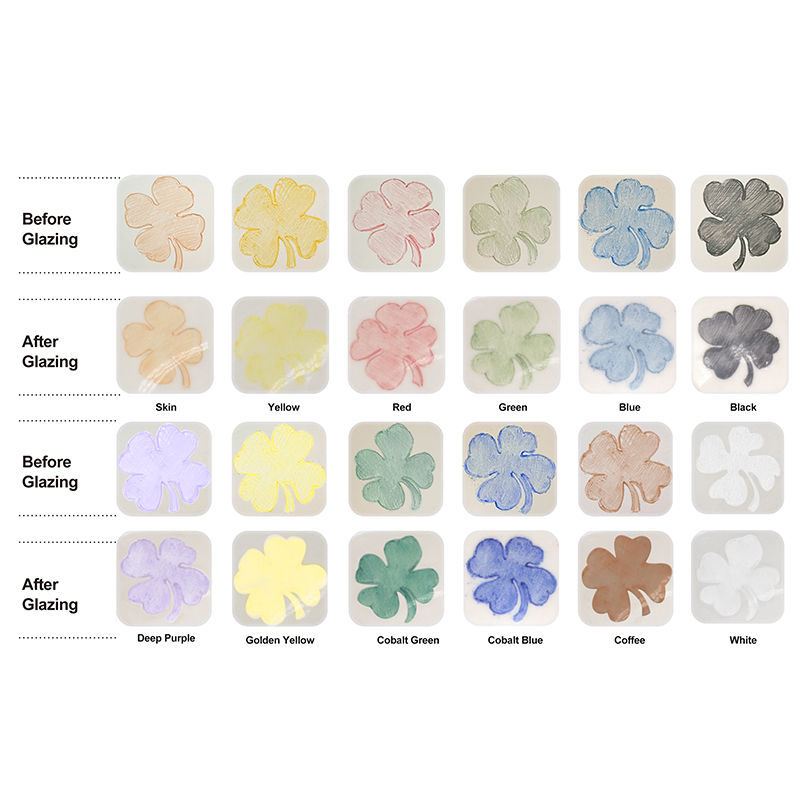
I run a pencil lead manufacturing operation in China. We produce 4,200 tons of graphite and carbon pencil lead every year. That is about 30% of China's total output. From that position, I see underglaze pencils as a completely different product philosophy from regular colored pencils. A regular colored pencil chases smooth writing and bright color. An underglaze pencil chases one thing: survival in a kiln at high temperature. Every design decision flows from that single demand.
How Do You Use Underglaze Pencils?
Most people pick up an underglaze pencil and use it like a regular colored pencil. The results are often weak color, broken tips, and smeared lines after glazing. That is a workflow problem, not a pencil problem.
Use underglaze pencils on bisque-fired ware with a slightly rough surface. Sharpen with a craft knife, not a pencil sharpener. Apply light pressure. Mist the surface with water before drawing to improve color transfer. When applying glaze over the marks, spray rather than brush to avoid smearing.
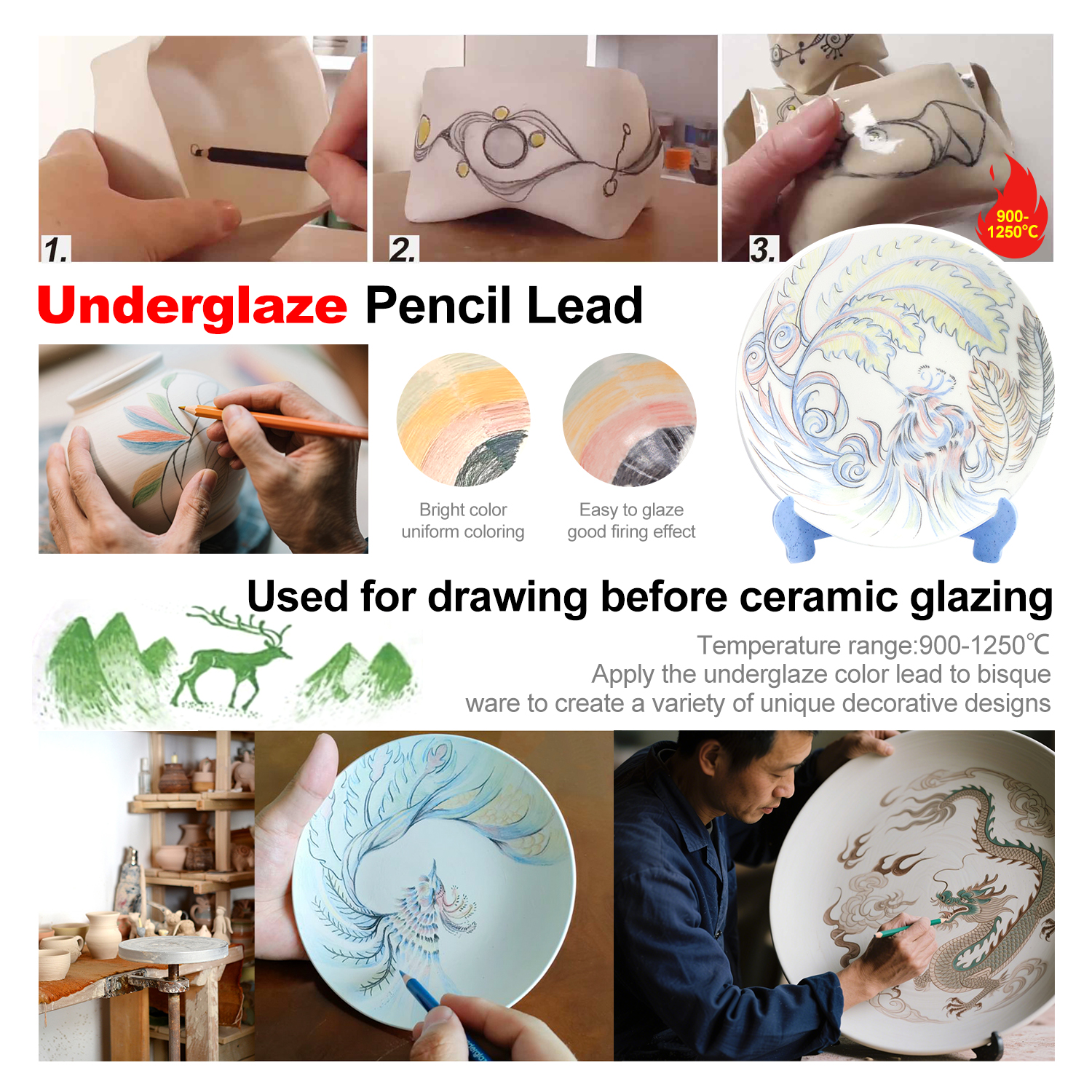
From a production line perspective, the underglaze pencil core is a fired rod made from ceramic colorant bound with ball clay, feldspar, silica, and wax or oil. Colorant content typically runs between 10% and 30% by weight. The wax or oil component, which can reach 5% to 30% in some patented formulas, is what gives the core its pencil-like drawing feel. Without it, the core would not transfer color to the surface at all.
Why Surface Texture Matters So Much
The bisque surface is not just a canvas. It is a mechanical substrate that grips the colorant particles as the pencil drags across it.
| Surface Condition | Effect on Drawing | Risk |
|---|---|---|
| Too smooth (unfired glaze, polished) | Colorant particles cannot grip | Weak color, poor adhesion |
| Correct bisque (light sanding, ~220 grit) | Good particle transfer, clean lines | Low |
| Too rough (coarse bisque) | Lines appear ragged and broken | Poor detail quality |
The factory recommendation during product development is to test the bisque surface with different sandpaper grits. The target is a surface that has enough friction to catch colorant particles but is smooth enough to allow a clean line. That balance point is usually around 180 to 220 grit on most commercial stoneware bodies.
Why You Must Use a Craft Knife to Sharpen
This is not a preference. It is a structural requirement.
The colorant load in an underglaze pencil core is high. High colorant content means low plasticity. Low plasticity means the core is brittle compared to a graphite or wax-based colored pencil core. A rotary pencil sharpener applies a twisting shear force to the core tip. That shear force breaks brittle cores far more often than it shapes them. A craft knife removes material in controlled slices along the axis of the pencil. It works with the core structure rather than against it.
How Water Improves Color Depth
Lightly misting the bisque surface before drawing is one of the most effective techniques available. The logic is straightforward. The colorant load in the pencil core is already at the upper limit of what the binder can hold while still maintaining usable strength. You cannot simply press harder to get more color. Pressing harder breaks the core and damages the bisque surface. Water softens the surface pores slightly and helps colorant particles transfer more completely into the bisque body. The result is deeper, more saturated color after firing, without adding any risk of a thick, unstable colorant layer.
How to Apply Glaze Without Ruining the Lines
The drawn lines are a thin, fragile layer of loose colorant particles sitting on the bisque surface. They have almost no mechanical strength before firing. A brush dragged across those lines will smear them. Spraying glaze is the factory-preferred method because the droplets land on the surface without any lateral force. If spraying is not possible, the first brush pass must be fast and extremely light. The goal of the first pass is to wet the colorant layer and fix it in place. Subsequent passes can add glaze thickness once the first coat has dried.
When Should You Use an Underglaze Pencil?
Artists sometimes use underglaze pencils for large color fills or bold washes. The results are almost always unsatisfying. That is because they are using the tool outside its designed range.
Use underglaze pencils for fine lines, contour drawing, crosshatch shading, handwritten text, and precise marks on curved surfaces. These are tasks where a brush cannot deliver geometric precision. Underglaze pencils are not designed for large area color fills or wash effects.
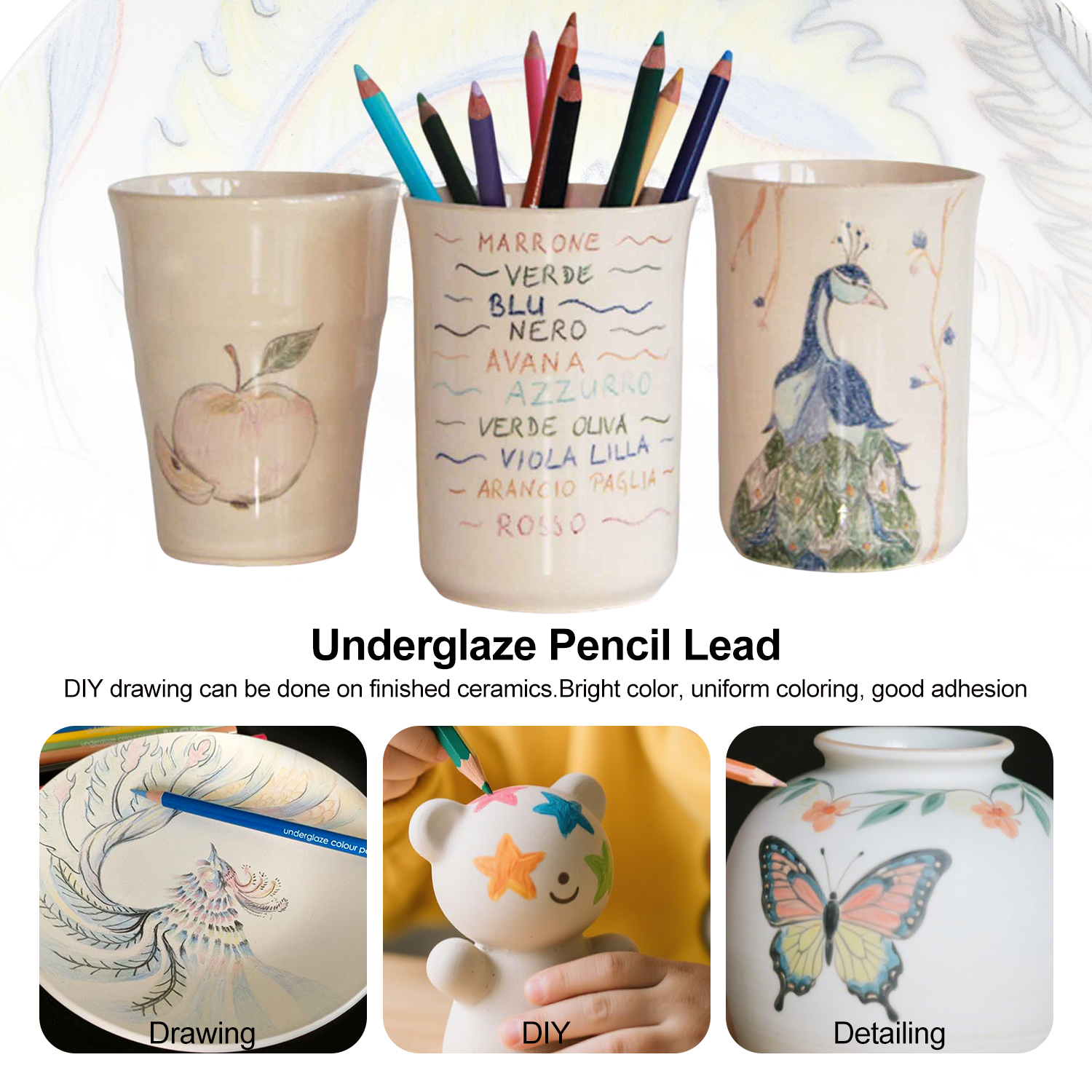
From a product positioning standpoint, I think of underglaze pencils as sitting in a very specific gap in the ceramic decoration toolkit. They sit between liquid underglaze applied with a brush and a simple marking tool. They are the only ceramic decoration tool that works with pencil logic rather than brush logic.
The Right Scenes for an Underglaze Pencil
| Task | Underglaze Pencil | Liquid Underglaze + Brush |
|---|---|---|
| Fine contour lines | Excellent | Difficult to control |
| Crosshatch shading | Excellent | Very difficult |
| Handwritten signatures | Excellent | Possible but unstable |
| Precise marks on curved surfaces | Excellent | Difficult |
| Large flat color fill | Poor | Excellent |
| Gradient wash effects | Not suitable | Excellent |
| Bold, saturated color blocks | Not suitable | Excellent |
One aspect of underglaze pencils that gets overlooked is how beginner-friendly they are as an entry point. Mistakes made with an underglaze pencil on bisque ware can be wiped away with a damp sponge before firing. That means a person with no brush control experience can start making precise marks on ceramic surfaces and see successful results immediately. The positive feedback loop that creates is significant for anyone learning ceramic decoration.
When to Avoid Underglaze Pencils
Forcing an underglaze pencil to fill large areas creates two problems. First, it wastes pencil material at a high rate relative to the area covered. Second, and more seriously, building up a thick colorant layer from heavy pencil application increases the risk of that layer separating from the bisque during firing or sticking to kiln furniture. The pencil is designed for thin, precise deposits of colorant. Any technique that pushes against that design creates downstream problems in the kiln.
What Are the Best Underglaze Pencils?
Brand names get discussed constantly in ceramic communities. From a manufacturing standpoint, the "best" brand conversation misses a more fundamental question.
The best underglaze pencils are those that match your firing temperature range, maintain consistent hardness across batches, and deliver stable color after firing. For most studio temperatures, black, cobalt blue, and dark brown colors perform most reliably. Light colors, especially yellow and white, are the most technically difficult to produce consistently.
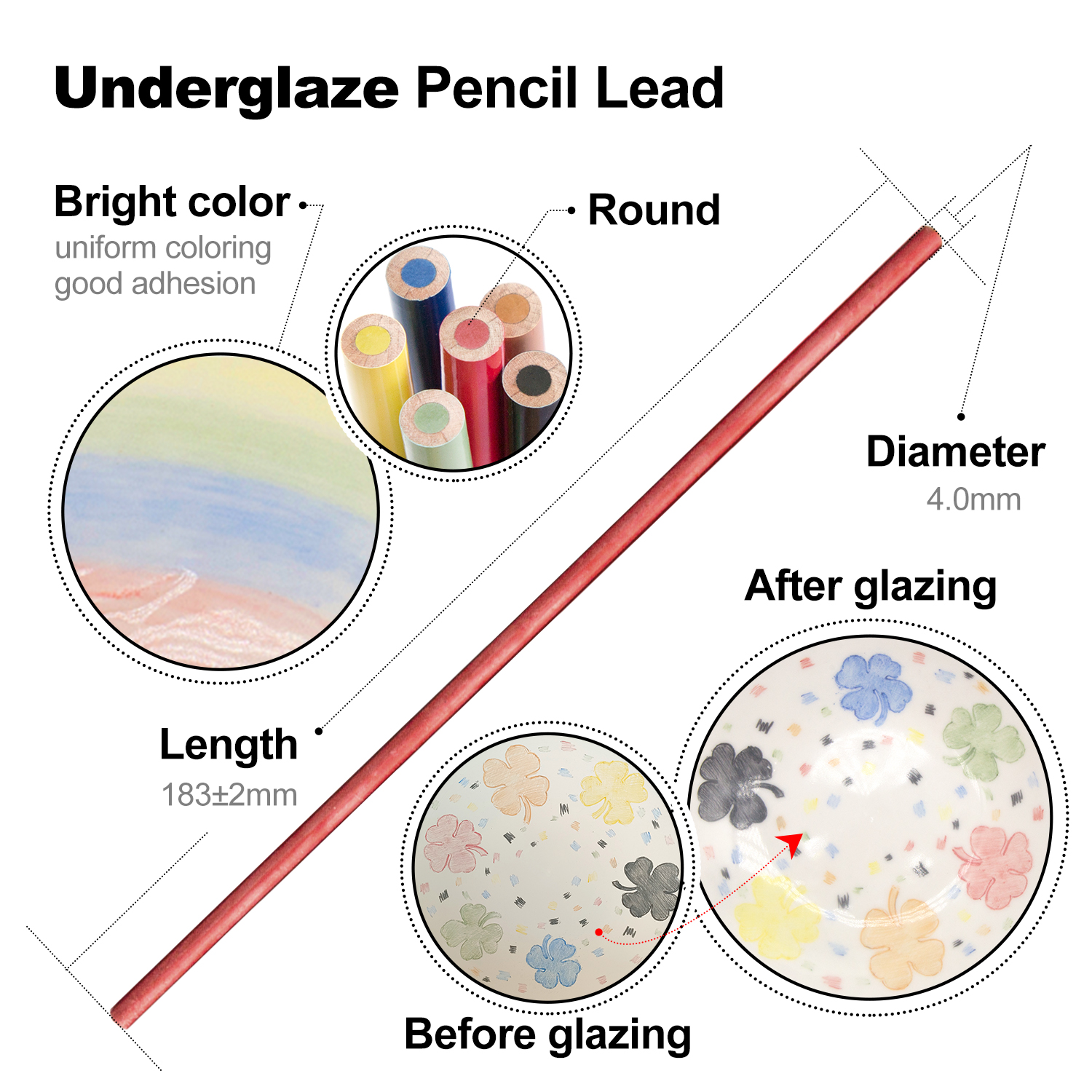
One fact worth knowing about the supply chain: Hobbyceram was the OEM manufacturer for AMACO underglaze pencils before 2023. That means products sold under both brand names during that period came from the same production line and the same formula system. I mention this not to dismiss either brand, but to illustrate that brand differentiation in this product category is sometimes more about packaging and market positioning than about fundamentally different manufacturing capabilities.
How Factories Judge Pencil Quality
When I evaluate an underglaze pencil from a production standpoint, I look at a specific set of criteria that are different from what most end users focus on.
| Quality Dimension | What Factories Check | Why It Matters |
|---|---|---|
| Batch-to-batch consistency | Core hardness variation between production runs | Inconsistent hardness changes drawing behavior unpredictably |
| Color stability after firing | Delta-E color difference between target and fired result | Color shift means the product does not perform as labeled |
| Core break rate | Percentage of cores that fracture during sharpening or use | High break rates indicate colorant load is too high for the binder system |
| Firing temperature range | Upper cone limit before color shifts or burns out | Mismatch between pencil and kiln program destroys the work |
The Temperature Variable Most Users Ignore
Firing temperature is the single most overlooked variable in underglaze pencil selection. Different colorant systems have different upper temperature limits.
- Black, cobalt blue, and dark green colorants: typically stable to Cone 10
- Brown and iron-based colors: often limited to around Cone 5 to 6
- Red, orange, and bright yellow: often limited to Cone 06 or lower
A red underglaze pencil that looks vivid on bisque ware will burn out completely in a high-fire kiln. This is not a defect. It is a colorant chemistry limit. Any manufacturer or supplier who cannot tell you the firing temperature range for each color in their pencil set is not giving you the information you need to make a good purchasing decision.
What the Chinese Manufacturing Base Offers
Production regions in China, particularly in Jiangxi and Zhejiang provinces, have a large established base of colored pencil and pencil lead manufacturers. Some of these facilities already handle OEM and ODM orders for underglaze pencils. Minimum order quantities at this level can be in the range of several thousand sets. The physical manufacturing of the pencil body and core is not the high barrier in this product category. The real barrier is in the colorant formula and the matching of that formula to a specific firing schedule. That matching experience, built over many production cycles, is where the actual product quality difference between suppliers lives.
Can an Underglaze Pencil Touch the Kiln?
This question comes up often when people are loading kilns and trying to maximize space. The answer from the production side is clear and specific.
Do not place bisque ware with underglaze pencil marks face-down directly on kiln shelves. The colorant layer contains fluxing materials that form a small amount of glass phase during firing. This glass phase can bond the ware to the kiln shelf, causing permanent damage to both. Always apply kiln wash to shelves, or use stilts and kiln posts to keep marked surfaces off direct contact with kiln furniture.
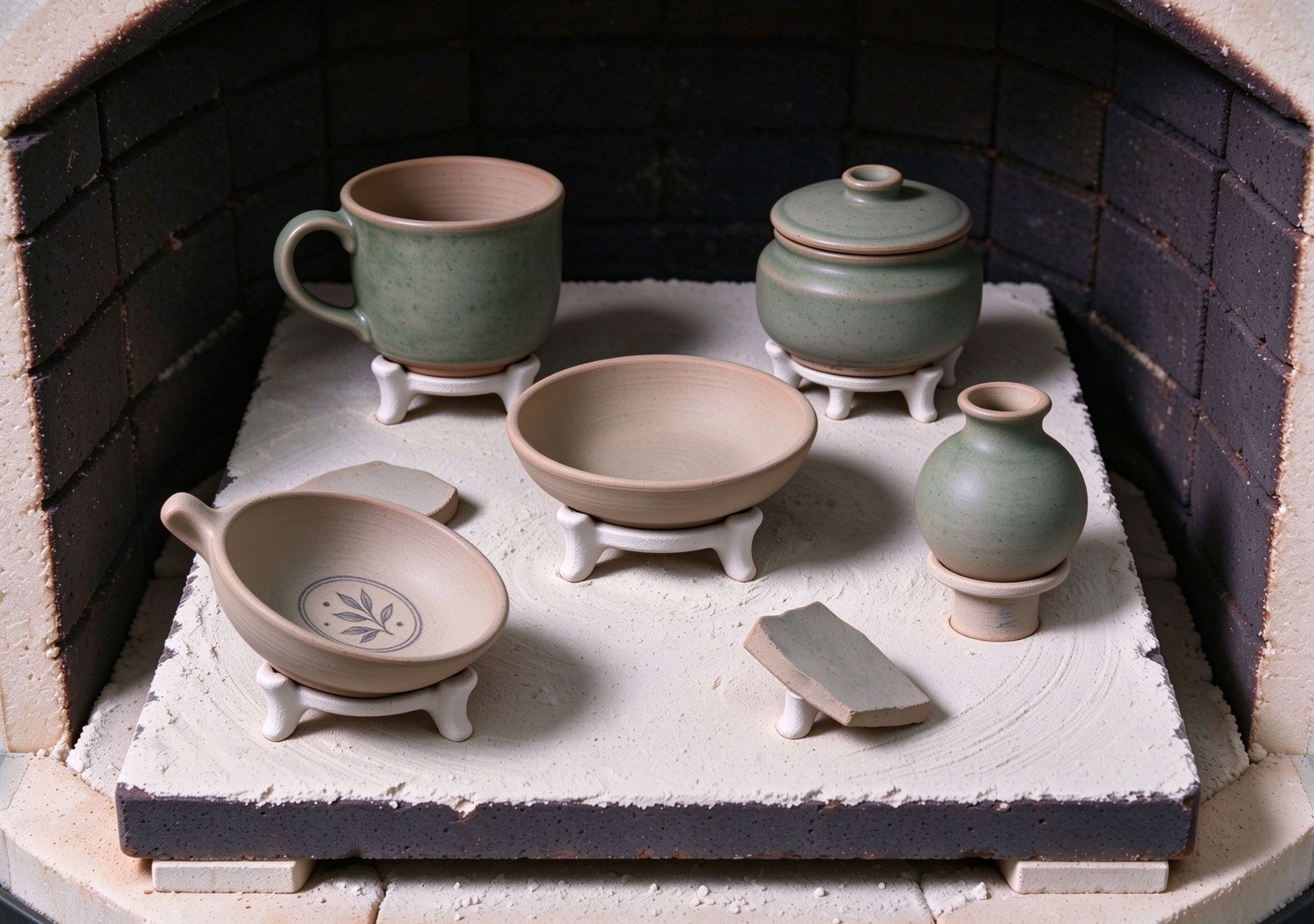
The reason for this risk sits directly in the pencil core formula. A standard underglaze pencil core contains feldspar and silica alongside the colorant and clay binder. At firing temperature, the feldspar and silica form a glassy flux phase. On the surface of the bisque piece, this is a useful property. It helps the colorant bond permanently to the ceramic body. But when the same flux phase is sitting against a kiln shelf surface, it acts as an adhesive between the piece and the shelf.
How Flux Content and Color Affect Sticking Risk
| Colorant Type | Flux Tendency | Sticking Risk |
|---|---|---|
| Dark colors (black, cobalt blue, manganese brown) | Higher flux activity at temperature | Higher risk |
| Mid-range colors (green, teal) | Moderate flux activity | Moderate risk |
| Light colors (yellow, white, pink) | Lower flux, but requires very high colorant load | Variable risk |
| Thick application of any color | Concentrates flux at contact point | High risk regardless of color |
The Correct Factory Approach to Kiln Loading
The minimum precaution is kiln wash on every shelf before every firing. This is standard practice in any professional ceramic operation and adds minimal cost relative to the risk of losing a piece to shelf sticking.
For higher-risk situations, for example high-temperature firing with dark color underglaze pencil marks covering large areas, the responsible approach involves a test fire first. The test procedure is straightforward: draw the same marks on a scrap piece of the same clay body, place it face-down on a kiln-washed shelf at the target firing temperature, and inspect for sticking after cooling. If any adhesion occurs, switch to stilts or waste-piece supports under the marked area for production firing.
I want to be direct about something here. Kilns are expensive. Finished ceramic work represents hours of time. The cost of a bag of kiln wash or a set of stilts is negligible compared to either of those. The engineers on our production lines think about sticking risk as a standard process variable, not an exceptional event. Treating it the same way in a studio context protects both the work and the kiln furniture.
Conclusion
Underglaze pencils work well when used for what they are designed to do: fine lines, precise detail, and controlled marks on bisque ware within the right firing temperature range.
About Leadur
I'm Andrea Chen, and I run Leadur, China's largest supplier of graphite and carbon pencil lead.
We produce 4,200 tons of pencil lead annually from our facilities in China, representing approximately 30% of China's total output. Our products are exported to Japan, India, Indonesia, Vietnam, Turkey, Iran, Pakistan, France, and the UK.
We supply pencil lead, pencils, colored pencils, and woodless pencils to stationery manufacturers, art supply distributors, and corporate gift buyers on a wholesale basis. Every product we make is customizable in logo, color, darkness, hardness, size, diameter, and packaging.
If you are sourcing pencil lead or finished pencil products at scale, I would be glad to talk.
Email: [email protected]
Website: www.zzbiye.com

You may also be interested in:

What are the best soft colored pencils for artists?
Are you struggling to find colored pencils that blend smoothly and create vibrant artwork? Many artists waste money on harsh, scratchy pencils that frustrate their creative process. The best soft

Do colored pencils come in different hardness?
You're staring at a box of colored pencils. Your art project needs precise lines and smooth colors. But which pencils should you choose? Yes, colored pencils absolutely come in different

Are soft core colored pencils better than regular colored pencils?
Choosing colored pencils can confuse artists. Soft cores promise richer colors. But do they truly outperform regular ones? Let me share what thirty years in pencil manufacturing reveals. Soft cores
Recommended Articles

What are the best soft colored pencils for artists?
Oct 24, 2025
What kind of paint do you use for mandala painting?
Sep 19, 2025

Do colored pencils come in different hardness?
Aug 26, 2025

Is it possible to make your pencil lead unbreakable?
May 11, 2025
